
Pesto Perfection: The Ultimate Pizza with Extra Flair
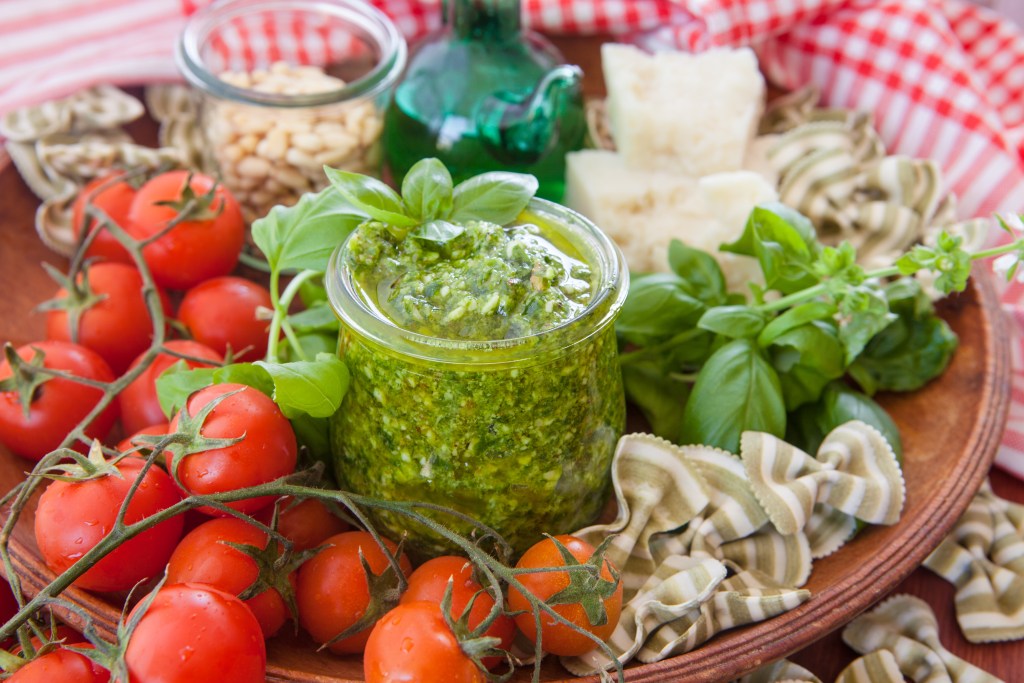
🌿 Pesto: Crushed Simplicity, Bold Flavor
Born in the sunlit hills of Liguria and perfected by hand, pesto is more than a sauce—it’s a legacy. With basil, garlic, pine nuts, and olive oil crushed into harmony, every spoonful carries centuries of tradition and the soul of Mediterranean cooking. Whether swirled into pasta or spread on warm bread, pesto turns simple ingredients into unforgettable flavor. It’s not just what you taste—it’s what you feel.
🌿 Pesto: A Crushed Symphony of Heritage, Simplicity, and Sensory Genius
Before it became a staple in gourmet kitchens and a darling of food influencers, pesto was a humble triumph of regional wisdom—born from sun-drenched basil fields, stone mortars, and the rhythm of hand-crushed ingredients. Its name comes from pestare, the Italian verb meaning “to pound” or “to crush,” and that’s exactly how it began: a sauce made not by machines, but by muscle, memory, and instinct.
But pesto isn’t just a recipe—it’s a ritual. A celebration of what grows close to home, transformed by hand into something unforgettable. It’s a sauce that speaks of soil, sunlight, and centuries of culinary intuition.
🇮🇹 Liguria: Where Pesto Found Its Soul
Pesto’s spiritual home is Liguria, a rugged coastal region in northwestern Italy where basil grows wild and olive oil flows like gold. In Genoa, the capital of Liguria, cooks began combining basil with pine nuts, garlic, Parmigiano-Reggiano, and extra virgin olive oil—creating a sauce that was both rustic and refined. Served with trofie or trenette pasta, often alongside boiled potatoes and green beans, pesto alla Genovese became a symbol of regional pride and culinary identity.
But pesto’s roots run deeper. Ancient Romans made a similar sauce called moretum, blending herbs, cheese, and oil into a paste. Over centuries, this idea evolved—shaped by geography, trade, and taste—until it became the vibrant green icon we know today.
🌍 Pesto Goes Global: Adaptation and Reinvention
As pesto traveled beyond Italy, it adapted to local ingredients and preferences. In Provence, it became pistou, made without nuts. In Sicily, sun-dried tomatoes and almonds gave rise to red pesto. In the U.S., arugula, kale, walnuts, and even avocado entered the mix. Each variation tells a story of migration, creativity, and culinary fusion.
Today, pesto is more than a sauce—it’s a format. A canvas for flavor. A way to honor freshness and elevate simplicity. Whether spooned over pasta, spread on sandwiches, swirled into soups, or drizzled on roasted vegetables, pesto brings brightness, depth, and soul to any dish.
🧄 The Anatomy of a Classic: Why It Works
Basil: Sweet, peppery, and aromatic—basil is the heart of pesto, offering both flavor and fragrance.
Garlic: Adds heat and depth, grounding the sauce in savory intensity.
Pine Nuts: Rich and buttery, they lend texture and a subtle sweetness.
Parmigiano-Reggiano: Salty, nutty, and umami-packed—this cheese ties everything together.
Olive Oil: Smooth, fruity, and essential—it binds the ingredients and carries the flavor.
Together, these elements create a sauce that’s raw yet refined, bold yet balanced. It’s a masterclass in restraint and harmony.
🧂 Technique Matters: Crushing vs. Blending
Traditional pesto is made with a mortar and pestle—not a blender. Crushing the ingredients releases oils slowly, preserving texture and flavor. The result is a sauce that’s coarse, aromatic, and alive. Blenders may be faster, but they can bruise basil and over-process the mix, dulling its vibrancy.
Making pesto by hand is a meditative act. It connects you to the ingredients, the process, and the generations who did it the same way. It’s not just cooking—it’s communion.
❤️ Why We Love Pesto: More Than Just Taste
Pesto resonates because it’s personal. It’s made by hand, not machine. It’s fresh, not processed. It’s adaptable, not rigid. It invites experimentation while honoring tradition. It’s the kind of food that feels alive—vibrant, fragrant, and full of story.
It also connects us to something deeper: the joy of making something beautiful from simple things. A handful of basil. A clove of garlic. A splash of oil. Crushed together with care and served with love.
🧠 Final Spoonful: Pesto as Philosophy
Pesto isn’t just a sauce—it’s a mindset. A reminder that flavor doesn’t need complexity. That tradition can evolve. That food is both nourishment and narrative. In every spoonful of pesto, there’s history, culture, and craft. There’s sunlight, soil, and soul.
So the next time you make pesto, don’t just follow a recipe. Channel a legacy. Crush with intention. Taste with reverence.
You must be logged in to post a comment.