

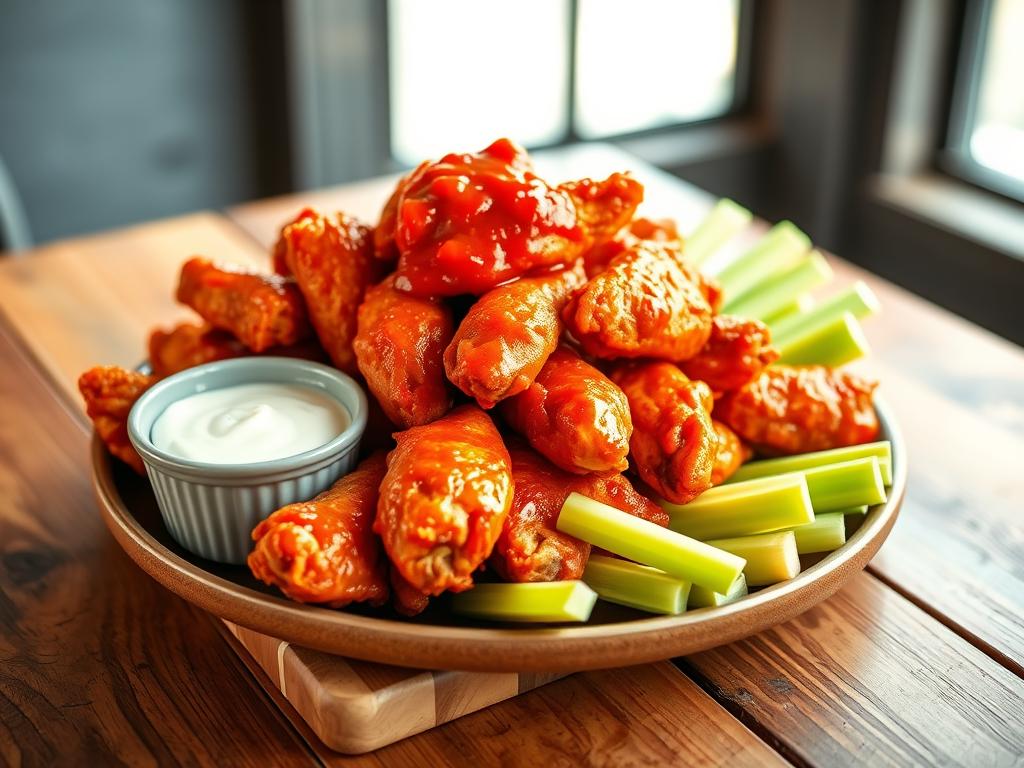

Buffalo chicken wings are a beloved dish characterized by their crispy skin, juicy interior, and the signature kick of spicy buffalo sauce. Perfect for gatherings, game days, or simply as a savory treat, these wings deliver both flavor and texture. They are straightforward to prepare, requiring a simple bake in the oven to achieve the desired crispiness, and they pair perfectly with the creamy coolness of ranch or blue cheese dressing. Served alongside crisp celery sticks, they offer a harmonious balance of heat and refreshment, making them an irresistible addition to any menu.
Origin and Cultural Significance
Buffalo chicken wings have become a staple in American cuisine, notably as a popular appetizer or snack, but they trace their roots back to a specific location and time. The dish originated in Buffalo, New York, in the 1960s at the Anchor Bar. Teressa Bellissimo, the owner, is credited with inventing the dish as a late-night snack for her son and his friends. It was an instant hit and quickly gained popularity, spreading across the United States and eventually becoming a worldwide sensation. Today, Buffalo wings are synonymous with sports events, especially football games, where they are as essential as the game itself.
The recipe has evolved over the years, with various adaptations and flavor profiles, yet the classic hot sauce and butter combination remains the hallmark of authentic Buffalo wings. This dish has not only become a cultural icon in America but has also influenced culinary trends globally. It is celebrated during the annual National Buffalo Wing Festival in Buffalo, drawing crowds that appreciate both the traditional and innovative takes on this classic dish.
Unique Ingredients and Flavors
The ingredients in Buffalo chicken wings might seem straightforward, but each plays a crucial role in achieving that perfect balance of flavors and textures. The chicken wings themselves are split into flats and drumettes, offering varying textures and flavors that appeal to different preferences. The baking powder is an essential ingredient often overlooked but critical for achieving the crispy skin without deep frying. When mixed with spices like garlic powder, smoked paprika, kosher salt, and black pepper, it creates a flavorful crust that enhances the wings’ taste profile.
The sauce is another defining element of Buffalo wings. The traditional sauce is a simple yet potent mix of hot sauce and melted butter. Frank’s RedHot is often preferred for its perfect balance of heat and tang, but any good quality hot sauce can be substituted to suit personal heat tolerance. The butter not only tempers the sauce’s heat but also adds a rich, velvety texture that clings to the wings beautifully. A touch of honey can be added for those who enjoy a hint of sweetness to balance the heat, showcasing the versatility of this dish.
Cooking Techniques
The cooking technique for Buffalo wings is integral to achieving the perfect crispy exterior and juicy interior. While traditional methods involve deep frying, baking offers a healthier and less messy alternative without compromising on crispiness. Baking the wings on a wire rack ensures even airflow around the wings, allowing them to crisp up perfectly. This method also reduces the amount of oil used, making it a more health-conscious choice. Flipping the wings halfway through the baking process ensures they cook evenly and develop a uniform golden-brown color.
The final step of tossing the baked wings in the hot sauce mixture ensures they are thoroughly coated, absorbing all the flavors of the sauce. This step is crucial to marrying the crispy texture of the wings with the bold, spicy flavors of the sauce, creating the quintessential Buffalo wing experience.
Conclusion
Buffalo chicken wings are more than just a dish; they are a culinary tradition that brings people together. The combination of crispy skin, juicy meat, and fiery sauce creates a sensory delight that has captivated audiences for decades. Whether served at a family gathering, a sports event, or simply as a treat on a quiet evening, these wings are sure to please. The recipe’s simplicity allows for both traditional presentations and creative adaptations, ensuring that Buffalo wings remain a favorite for generations to come.
Buffalo Chicken Wings
Description
Buffalo wings are the undisputed king of game day food. Crispy skin, juicy meat, and that unmistakable fiery hot sauce—balanced with cool ranch or blue cheese.
Ingredients
Buffalo Chicken Wings Ingredients
Instructions
Preparation
-
Preheat the Oven
Preheat your oven to 400°F (200°C).This ensures that the oven is at the right temperature when you're ready to bake the wings. -
Prepare the Baking Sheet
Line a baking sheet with foil and place a greased wire rack on top.The wire rack allows air to circulate around the wings, promoting even cooking and crispiness. -
Pat the Wings Dry
Thoroughly pat the chicken wings dry with paper towels.Removing moisture helps achieve a crispy skin.
Season the Wings
-
Toss with Spices
In a large bowl, toss the wings with baking powder, garlic powder, smoked paprika, kosher salt, and black pepper.Ensure all wings are evenly coated with the seasonings.
Bake the Wings
-
Arrange on Rack
Arrange the seasoned wings in a single layer on the wire rack.Leave space between the wings so they bake evenly. -
Bake Until Crispy
Bake the wings for 40–45 minutes, flipping them halfway through the cooking time, until they are crisp and golden.Flipping ensures even crisping on both sides.
Prepare the Sauce
-
Mix the Sauce
In a mixing bowl, whisk together the hot sauce, melted butter, and honey (if using) until well combined.Adjust the amount of honey for a sweeter sauce, if desired.
Coat and Serve
-
Toss Wings in Sauce
Toss the baked wings in the sauce until they are well coated.Use tongs to evenly coat each wing with sauce without breaking the skin. -
Serve the Wings
Serve the wings hot with ranch or blue cheese dressing and celery sticks on the side.These accompaniments help balance the wings' spiciness.
Note
For optimal crispiness, ensure the wings are fully dried before coating them with the baking powder and spice mix. This step is crucial for achieving that signature crunch. Adjust the level of heat by varying the quantity of hot sauce to suit your preference; adding honey balances the spice with a hint of sweetness. Using a wire rack allows hot air to circulate evenly around the wings, promoting even cooking. If possible, use a meat thermometer to ensure the internal temperature of the chicken reaches 165°F (74°C) for safe consumption. Serve immediately after tossing in the sauce to maintain the crispy texture. For those who prefer a different flavor profile, consider experimenting with different hot sauces or adding a dash of cayenne pepper for extra heat. Resting the wings for a few minutes post-baking can help the coating adhere better when tossed in the sauce.
The Essence of Buffalo Chicken Wings
Buffalo chicken wings are a culinary triumph that seamlessly blend the perfect combination of crispy texture and tantalizing heat. Each bite offers a delightful crunch, followed by the rich, tangy heat of the hot sauce—a harmony that excites the taste buds. The addition of paprika and garlic powder enhances the depth of flavor, while the optional honey provides a subtle sweetness that balances the fiery kick, creating an irresistible taste experience.
Memorable Moments and Reflections
I fondly recall the first time I prepared these wings for a family gathering; they were an instant hit, disappearing from the platter within moments. The aroma that fills the kitchen while baking is both comforting and enticing, setting the stage for a memorable meal. These wings are not just food; they are an experience, bringing people together in shared enjoyment.
Serving Suggestions and Variations
Serve these wings with a side of cool ranch or blue cheese dressing, providing a creamy contrast to the spicy wings. Celery sticks not only add a refreshing crunch but also act as a palate cleanser. For a creative twist, try adding a dash of cayenne pepper for extra heat, or experiment with different hot sauces to suit your flavor preference.
Storing and Sharing
Leftovers, if any, can be stored in an airtight container in the refrigerator for up to three days. Reheat them in the oven to maintain their crispiness. I encourage you to recreate this recipe, adding your personal touch, and share your results. Feel free to ask questions or share your experiences—each story adds to the rich tapestry of culinary exploration.
Frequently Asked Questions
How can I make the wings spicier?
To make the wings spicier, you can add extra hot sauce or incorporate cayenne pepper into the sauce mixture.
Can I use frozen chicken wings for this recipe?
Yes, you can use frozen wings, but make sure to thaw them completely and pat them dry before seasoning and baking.
What type of hot sauce is best for buffalo wings?
Frank's RedHot is traditionally used for buffalo wings, but you can use any hot sauce you prefer based on your heat tolerance and flavor preference.
Is there a way to make these wings healthier?
For a healthier option, you can use an air fryer instead of baking or frying them, and reduce the amount of butter in the sauce.
Can I prepare the wings ahead of time?
Yes, you can season the wings and store them in the refrigerator for up to 24 hours before baking them.
You may also like...




You must be logged in to post a comment.