š± Introduction: The Everyday Ingredient With Extraordinary Meaning
Every kitchen has onions. They rest quietly in baskets, drawers, or nets in the pantry, unassuming and patient. Unlike flashy seasonal produce, onions are always there ā year-round, global, universal. But behind this everyday presence lies something extraordinary.
The onion is history, culture, and connection layered together ā just like its skin. From ancient rituals to your own dinner table, the onion has carried flavor, memory, and even symbolism for thousands of years. To dismiss it as ājust another vegetableā is to miss the story it tells.
š§ Onions Through History: From Pharaohs to Farmers
The onion is one of the oldest cultivated crops in human history, with evidence of use dating back over 5,000 years.
-
Egypt: Onions were buried with pharaohs as symbols of eternity, their concentric layers representing cycles of life and death. Paintings of onions adorn ancient tombs.
-
Rome: Roman soldiers ate onions for strength and healing. The pungency was thought to ward off illness.
-
Middle Ages: Onions were used as currency, medicine, and food across Europe. Families paid rent in onions, and healers prescribed them for everything from headaches to heart ailments.
-
The Americas: Indigenous peoples incorporated wild onions into stews and medicines long before European contact. Later, onions became staples in early colonial kitchens.
Onions were not just food ā they were symbols of health, longevity, and resilience.
š³ The Onion as Culinary Foundation
Onions are the unsung hero of global cuisine. They rarely star in the dish, but without them, flavor falls flat.
-
French Mirepoix: Onions, carrots, and celery form the base of soups, sauces, and braises.
-
Italian Soffritto: Onions with garlic, olive oil, and sometimes celery ā the foundation of pasta sauces.
-
Spanish Sofrito: Onions sautƩed with peppers, garlic, and tomatoes, essential for paellas and stews.
-
Indian Curries: Slow-cooked onions are the flavor engine behind countless gravies and dals.
-
Asian Stir-Fries: Quick-fried onions bring balance to ginger, soy, and chili heat.
Cooking Tip: The way you cut and cook onions dramatically changes the outcome:
-
Thin slices sautƩed quickly = sweetness.
-
Slow caramelization = deep umami richness.
-
Minced raw onions = sharp bite in salsas and salads.
Every technique unlocks a new dimension of this humble bulb.
š Onions and Memory: Why They Make Us Cry
Yes, onions make us weep. Cutting them releases sulfur compounds that irritate the eyes. But in a way, those tears remind us that cooking is emotional.
-
The smell of onions frying in butter might remind you of your grandmotherās soups.
-
The first stir-fry you ever made probably started with onions crackling in hot oil.
-
The winter stew that got you through hard times likely had onions simmering at its heart.
Food memory is powerful. Smell and taste are directly tied to the brainās memory centers, which is why one whiff of sautĆ©ed onion can bring back decades-old moments.
š Onions Across Cultures: A Shared Language of Flavor
The onion is one of the rare foods that transcends geography and class.
-
In France, onion soup is a comfort food steeped in centuries of tradition.
-
In Mexico, cebolla is essential in tacos, salsas, and grilled dishes.
-
In India, onions are the backbone of countless masalas.
-
In Japan, negi (a type of green onion) is sprinkled over ramen and hotpots for balance.
-
In Ethiopia, onions are slow-cooked with berbere spices to form the base of many stews.
No matter where you are in the world, the onion speaks a language of flavor everyone understands.
š Pull Quote
āTo savor the onion is to savor the past ā every layer a story, every tear a reminder that food is memory.ā
š Why Onions Still Matter Today
In a world of food trends, exotic imports, and hyper-marketed āsuperfoods,ā the onion remains timeless. Itās affordable, accessible, and adaptable. It carries both the weight of tradition and the possibility of reinvention.
More importantly, onions teach us something profound about cooking: the most ordinary ingredients often carry the most extraordinary meaning.
⨠Practical Takeaway: How to Savor the Source in Your Kitchen
-
Try a slow caramelization session ā cook onions on low heat for 40 minutes to unlock natural sweetness.
-
Explore global variations: French onion soup, Indian onion pakoras, Mexican escabeche.
-
Keep a āmemory journalā ā note which dishes in your life always begin with onions and why they matter.
š Closing Reflection
The humble onion is more than food. It is a story, a ritual, a connection between past and present. Every tear you shed while chopping is a reminder: cooking isnāt just about flavor ā itās about memory, meaning, and the shared experience of being human.
So the next time you reach for an onion, pause. Savor the source. And remember: youāre not just cooking dinner ā youāre keeping history alive.

Steam, Donāt Scream: The Post-Cook Grain Ritual
š Why Patience Makes Perfect Grains Rice, quinoa, couscousāgrains arenāt finished when the timer dings. Their last stage is off the heat, under a lid. This quiet ritual is what separates gummy mush from fluffy perfection. š Steam, Donāt Scream: The Post-Cook Grain Ritual By The Editorial Team at Home Chefs United NewswireSeptember 25, 2025
Taste Early, Taste Often: The Golden Rule of Flavor Control
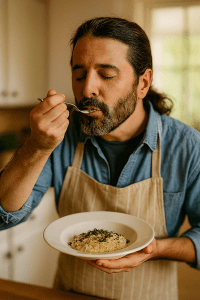
š The Rule Every Chef Lives By Great cooking isnāt about following instructions word-for-wordāitās about adjustments. The only way to know what a dish needs is to taste along the way. Chefs swear by this habit, and itās the difference between food thatās fine and food thatās unforgettable. š Taste Early, Taste Often: The Golden

Room Temperature Rules: The Secret to Better Baking and Searing
. š§ Why Temperature Changes Everything From cookies that bake evenly to steaks that sear with confidence, starting at room temperature is the simplest rule that separates home cooks from professionals. Itās not fussyāitās science. š§ Room Temperature Rules: The Secret to Better Baking and Searing By The Editorial Team at Home Chefs United NewswireSeptember

How to Read a Recipe Like a Pro (Before You Cook)
š„ Stop Surprises Before They Start Most cooking disasters donāt come from bad pans or weak seasoningāthey come from us jumping into a recipe blind. Pros read recipes like pilots scan flight plans. Hereās how to do the same at home. š„ The Power of Mise en Place By The Editorial Team at Home Chefs

The Power of Mise en Place: Why Chefs Swear by It
š„ The Secret Weapon Behind Every Great Kitchen Mise en placeāāeverything in its placeāāisnāt just chef lingo. Itās a mindset. When your kitchen is organized before you turn on the stove, cooking stops being stressful and starts being enjoyable. š„ The Power of Mise en Place By The Editorial Team at Home Chefs United NewswireSeptember

Pantry Confessions: Whatās Lurking Behind the Door
š„« What Your Pantry Really Says About You Your pantry isnāt just food storageāitās a personality test. From quinoa you never cooked to the hot sauces you bragged about but never touched, every item tells a story. š„£ Your pantry is less about what you eat and more about what you intend to eat. By
You must be logged in to post a comment.